


To receive important alerts and updates from Gold Coast Primary Health Network, please submit the form below.
Receive important alerts and updates from Gold Coast Primary Health Network.
"*" indicates required fields
To receive important alerts and updates from Gold Coast Primary Health Network, please submit the form below.

Gold Coast Primary Health Network (GCPHN) supports general practices in our region with a range of Quality Improvement (QI) activities. To help drive higher cervical cancer screening rates, our PHN has partnered with practices locally to increase uptake, including for self-collection.
Every two hours, an Australian woman is diagnosed with a gynaecological cancer. These are cancers that involve the female reproductive organs – the vulva, vagina, cervix, uterus, fallopian tubes, ovaries and placenta.
For some types of cancer screening, particularly cervical and bowel cancer screening, early – and regular – screening can make a vital difference to outcomes.
“While many of us know early cancer screening can make a difference, ensuring we get to the GP, and get tests done if they’re needed, can sometimes be a task that’s deprioritised or missed,” explains Madeleine Walker, a Project Officer involved in QI initiatives at Gold Coast Primary Health Network (GCPHN).
“Women and people with a cervix aged 25 to 74 may not know the full details about choices available with cervical cancer screening – including swabbing in a comfortable environment at a GP clinic – or even at home themselves if needed.”
“There can also be a variety of reasons we choose not to get cancer screening done too, including not feeling comfortable having conversations about our health, difficulties with accessing healthcare, or the fast pace of daily life meaning we put it in the ‘too hard’ basket.”
As part of Gynaecological Cancer Awareness Month, we’re drawing attention to work that’s underway in Gold Coast general practices – in collaboration with our team at GCPHN, to drive positive change and encourage higher cervical screening test (CST) uptake.
Cervical cancer and bowel cancer have been in focus as part of a quality improvement (QI) activity coordinated by our PHN earlier this year.
Statistically, from 2020 to 2024, about 5.5 million people aged 25 to 74 had an HPV test. That’s around 78% as a national participation rate – with the Gold Coast reaching just over 81% participation. There was a trend with self-collected HPV tests increasing considerably – up from 1,512 in 2018 to 535,817 in 2024.[1]
As part of GCPHN’s QI activity, practices were invited to opt in, with remuneration and support from our team – to drive higher uptake of either type of cancer screening with patients. Recommended testing was in-clinic, and patients were offered the choice of at-home screening if it was needed.
Go straight to our materials for GPs
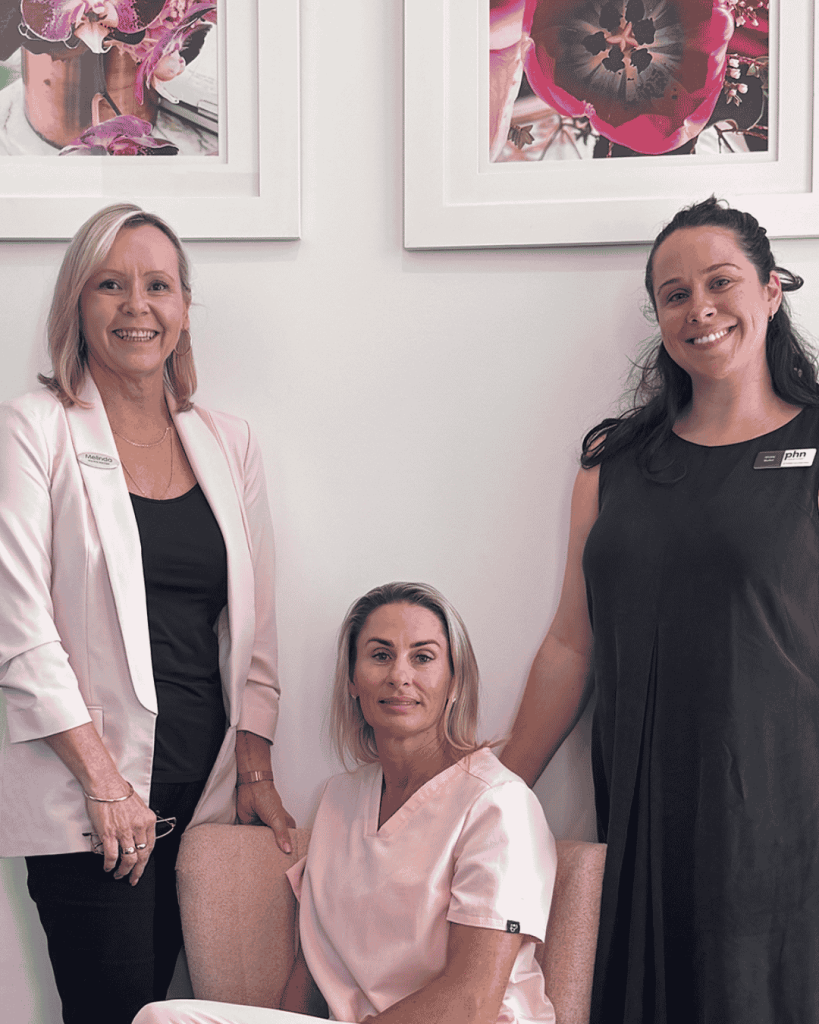
Locally, Her Medical, a GP clinic based at Southport, was one provider who stepped out of their comfort zone in joining the quality improvement activity. The team wanted to enhance its data, tackle misinformation and make sure it could offer testing at times that worked for as many of its patients as possible.
“A lot of our patients are working,” says Melinda Kaka, Practice Manager at Her Medical.
“When we drilled down and had a look at the figures for those who haven’t had cervical screening, the biggest cohort was 25 to 45. That’s our patient base. We thought, ‘Something has to be done here.’
Hesitancy is a factor that can impact patient screening rates.
“One of the barriers to screening is not wanting to have someone do it for you; another is time – that you’re busy with the kids, you can’t come in during the week, you can’t come in with a pram and so on. We thought we could offer Saturdays for availability and access – and remove a barrier.”
Although appealing, Melinda says the team needed to ensure its processes were ‘tight’ for extended hours to make sense financially.
“Our clinic looks beautiful and feels great, but we run on a small margin. To offer our services and run smoothly, we have more staff on. It takes a lot of planning and a lot of systems, but when you get it right, it’s great for everyone, especially for our patients,” she says.
Around 100 patients attended the clinic’s trial Saturday screening sessions back in May, generating positive feedback. Saturday appointments are now offered each month by the practice.
At the outset of signing up to the QI activity, Her Medical’s team realised they had some challenges with data quality and clarity.
Individual health data can be poor for many reasons, including women and people with a cervix not remembering when they were last tested, how often they need testing, and other misperceptions.
“There are more women than you’d realise that have been in traumatic situations and are reluctant and not going to the doctor – we see a lot of that,” says Melinda.
“And we get so many patients that have been on Dr. Google first – it’s crazy.”
Better identifying patients overdue for a CST was prioritised to help ensure GP conversations could be informed with the most accurate information possible.
Drawing attention to self-collection has helped Her Medical’s team improve its cervical screening test rates too – including through social media education and GP-led conversations.
This trend was a wider one noted across various practices involved in the QI activity, with self-collection providing an alternative to consider for patients reluctant to get a test done.
“There’s not enough information out there about self-collection,” reflects Renee Miles, Nurse Lead at Her Medical. “When patients realise they can do a self-collect, they come and do it.”
What is self-screening?
An explainer video by the National Cervical Screening Program goes through choices with cervical cancer screening testing:
Another challenge is getting patients to realise how crucial getting a check up again is, after results are released.
“We have patients that are symptomatic and come in and then they don’t want to come in and discuss the results,” says Renee.
“These patients were worried enough to come in and have a test done, but then they won’t come in to get their cervical screening test results. They’ll say, ‘The result says, non-urgent,’ but you just can’t leave it six months.”
This issue, adds Melinda, is one she’s seen across a career spanning more than 30 years working in general practice. It’s a serious one, with not attending a recall appointment potentially resulting in serious diagnoses being missed, or health news not being given to those that need to know it, like a next of kin.
“At recall appointments, consultation happens with a patient about topics like, ‘Do you need further testing? Do you need education materials? Do you need treatment – and are you going to start medication?’,” says Melinda.
Her Medical has narrowed choices with how recall appointments are classified in its clinical software – from six alternatives to three.
Simplifying and clarifying options is a recommendation Melinda encourages other practice managers to think about – if they need it.
“We offer no action, urgent or non-urgent as recall choices – non-urgent is within the next month and urgent is within the next 24 hours,” she says.
“Recall appointments are so important – results need clinical interpretation and interpreting results matters. Sometimes we may even need to involve the police if we don’t have the right details to share a diagnosis with a patient or their next of kin.”
And when the time comes to break bad health news – if this is needed – what a patient might need to feel supported at this time is front of mind.
“If we know information a patient is going to be told will be particularly difficult, our nurse works with our GP to consider their care,” says Melinda. “We make sure they don’t stay in the waiting room long. We arrange it so they can leave as they’d like afterwards if needed too – they don’t have to come out, be at the counter, and be in tears.”
[1] Australian Institute of Health and Welfare. (2025). National Cervical Screening Program monitoring report 2025. AIHW. https://www.aihw.gov.au/reports/cancer-screening/ncsp-monitoring-report-2025.


So we can provide you with the most accurate information,
please tell us a little more about yourself

